


our story
For over a century, the metal speculum has been the tool that doctors have used in a gynecological pelvic exam. Often reported as causing pain and discomfort, the speculum is designed with little sensitivity towards the female body.
Similarly, the 311,000 deaths that occur annually due to cervical cancer demonstrate the tragedy of global health systems that are designed without the communities most affected at the heart of its solutions.
Reinventing the Speculum_
Shifting the paradigm for healthcare_
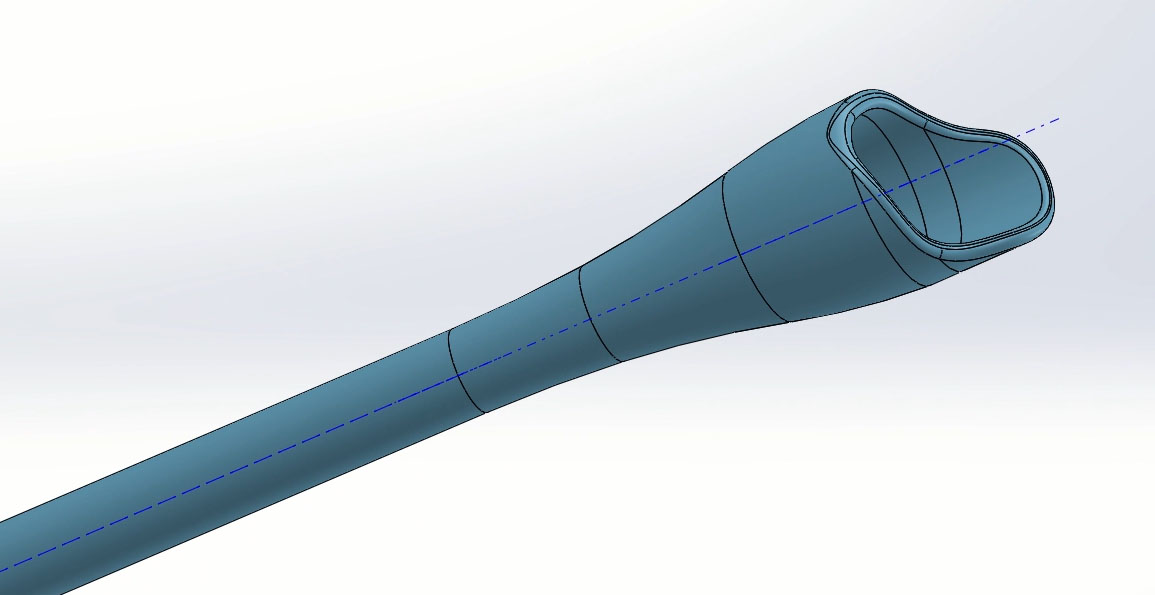
To combat this issue a women-lead team from Duke University developed the Callascope, a device that can be used by individuals to take an image of their own cervix without the use of a speculum.
Using low-cost computing, the Callascope technology makes cervical cancer screenings accessible to resource limited settings.
Pictured (Top, Left, Right): Dr. Nimmi Ramanujam, Dr. Mercy Asiedu, Julia Aguodogo
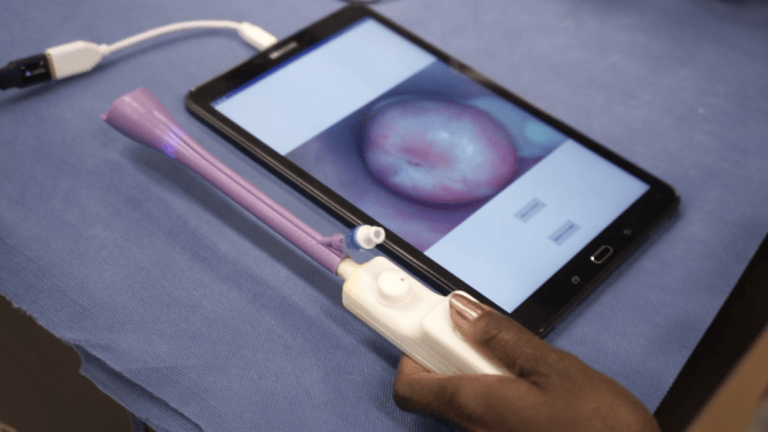
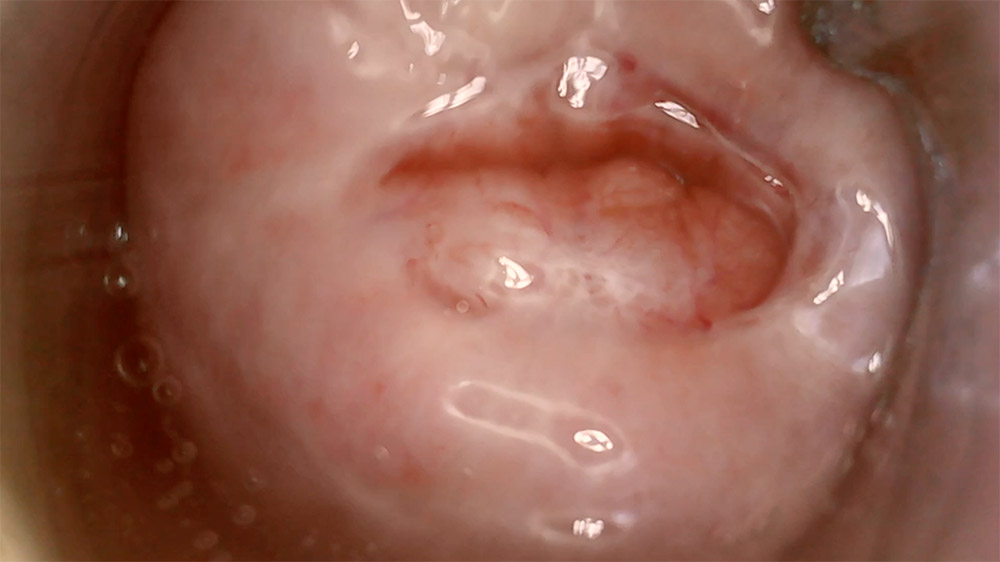
Video of the cervix captured by the callascope
Looking at the cervix in a new light_
During the initial research studies of the Callascope, biomedical engineers Mercy Asiedu and Julia Agodogo interviewed women in Durham, NC after they tested the device. The stories they heard were profound, revealing intimate insights about how women perceived their reproductive anatomy and health. This inspired a collaboration with oral historian Dr. Wesley Hogan to use the tool for artistic and educational purposes.
The situations in which I thought about my cervix are when [ the doctors ] were rooting around in there with the speculum and it kind of hurt because they could not find it.
I use to think of red when I thought about reproductive parts. Now it is just blue because I am free from all that pain. From the red.
It’s just so cool that there is a camera that shows you so that you can see for yourself whatever someone else is seeing during a pelvic exam.
You know when they show thee torture chamber with all the weird stuff hanging? This [the speculum] could be right in there with all the rest of the torture instruments.
Wesley Hogan, Still from The (In)visible Organ Documentary Film
Engaging artists_
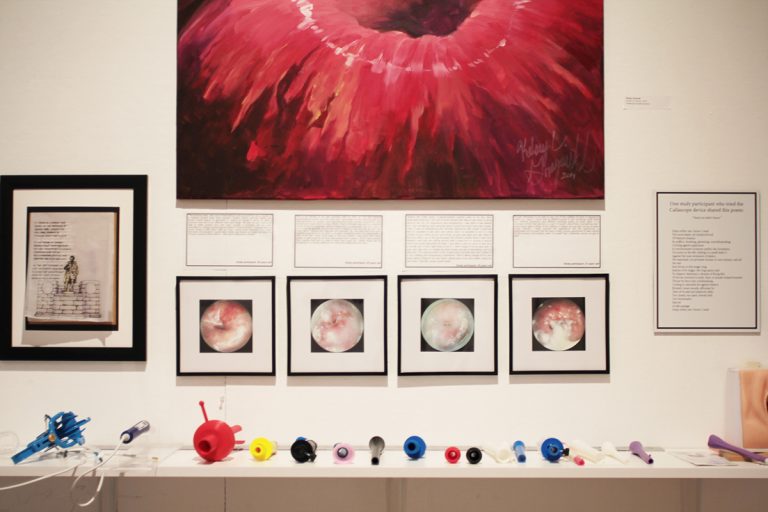
In February 2020, fifteen artists were invited to create works of art inspired by the Callascope studies and interviews of women using the device.
Curated by Libby Dotson, Adair Jones, and Diane Lee, The (In)visible Organ exhibited visual art, medical photography, sculptures, and installations from students locally to established artists internationally. This exhibit disrupted the narrative of invisibility and shame surrounding sexual and reproductive health by bringing together the stories of cis women, trans men, and non-binary people through art.
Pictured (Top, Bottom): Participating Artist Saba Taj, Sculptures by Meg Stein


the (in)visible organ
A calla campaign documentary
The documentary film_
Directed by Andrea Shinyoung Kim
The (In)visible Organ documentary is about how a medical device designed to prevent cervical cancer became a tool for bringing awareness to injustices in reproductive health. Following the Callascope from its design to its use, biomedical engineers, nurses, and women from across Durham, NC to Accra, Ghana have shared their thoughts on the cervix and women’s health. The (In)visible Organ captures the role of medical imagery as an artistic mode for destigmatizing the cervix.
Register for the January 14 2021 virtual premiere and early access link.
Full film to be available for streaming in January 14 2021. You may register a free public screening of the film.
CC the Calla Campaign